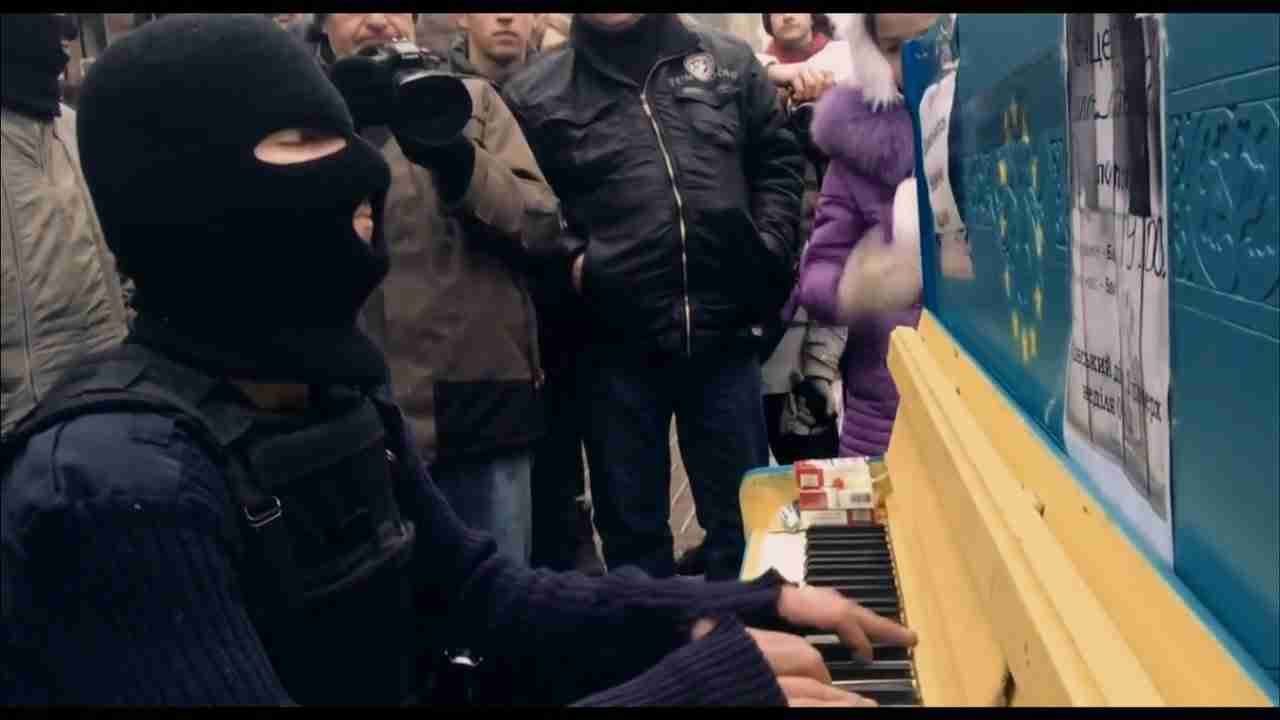
A piano appears in the square (Maidan) where the Ukrainian revolution is raging. Conservatory student Antuanetta Miszczenko sees three men carrying it off to use as part of a barricade, protecting the protesters from the soldiers’ bullets. For the young pianist the instrument is sacred, and she decides to defend it. She promises to return to Maidan every day to play Chopin and the Ukrainian anthem in order to save the piano. Her conservatory teacher, Lyudmila Chichuk, despite her fragile pianist’s hands, is helping to build the barricades. So when she meets Antuanetta she joins her: despite the -20 degrees freezing the keys, they begin giving a concert for the people gathered on Maidan. Singing anthems and national songs, the people come together and encourage one another to resist. The piano then becomes a symbol of the Ukrainian revolution and starts to move. Wherever something important happens, the piano appears. It is even brought in front of Parliament to “face” the armed police. Now Chopin is used to resist and fight in the squares. The Russian armed forces respond by installing a large sound system blasting Russian pop music at full volume. In this way the authorities hope to drown out the sound of the instrument, which instead, as the first victims begin to fall, rings out even louder. What’s more, other pianos begin to appear in many squares, becoming the musical symbol of civil resistance. To the police they become the “piano extremists”, and many of the pianos are destroyed during the clashes. Yet despite this, the spark has now lit the hearts of the revolutionaries.