
by Giuliana Prestipino
Little Richards: I Am Everything, by Lisa Cortés
Sabato 24/02 • 18:15 | Cinema Massimo
Little Richard lived long enough to see with his own eyes that he had been the architect of rock ‘n’ roll and of all those forms of spectacularisation of music that over time have given birth to ever new idols, from Elvis Presley to Harry Styles by way of David Bowie, Mick Jagger, Michael Jackson, Prince and Freddie Mercury. If Little Richard always proclaimed himself, and crowned himself, king, or rather queen, of rock ‘n’ roll, it was due not only to his eccentric and megalomaniac nature, but above all to the lukewarm reception of the star system and of the society of the time, which never truly paid him the honours and fanfares he knew he deserved.
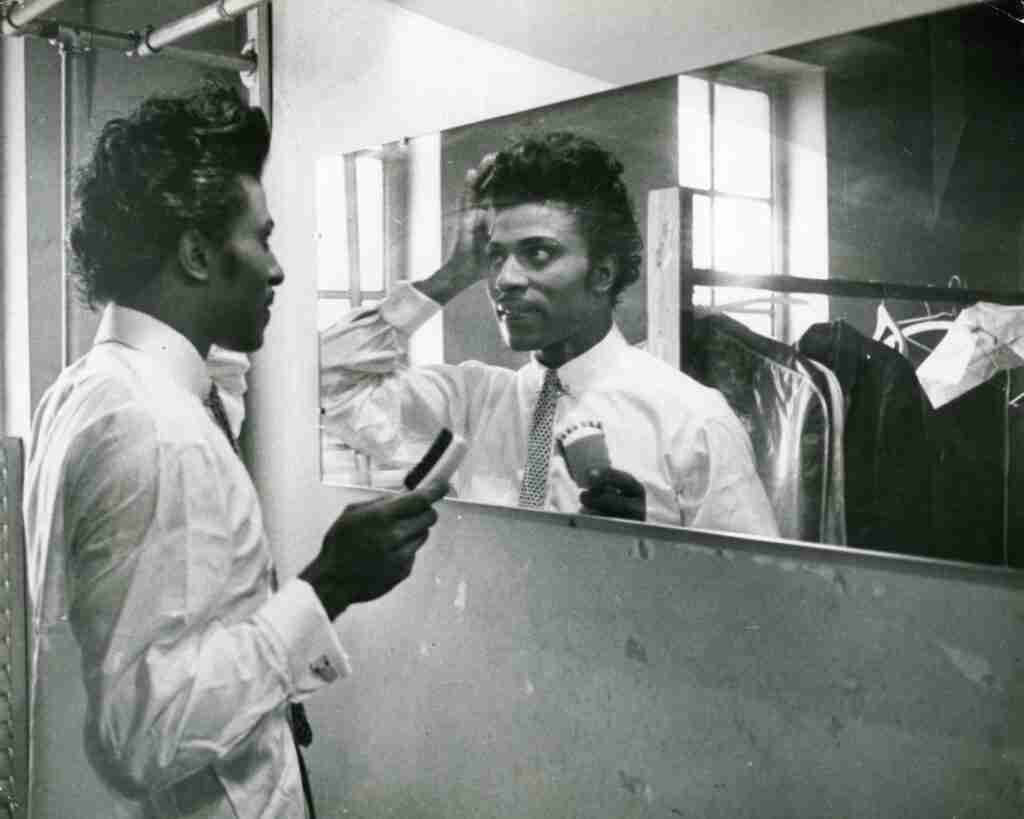
The overwhelming documentary I Am Everything by Lisa Cortés not only reflects the authenticity of the character in all his contradictions and the cultural legacy he left to posterity, but at the same time tells us something about America at the moment rock exploded: the cult of personality in art, which in some cases overshadows creativity (as it was for Elvis and other figures who could embody the perfect American dream) and the racial clash/encounter. Little Richard was pure talent, he wrote hits that became milestones of rock ‘n’ roll, songs like Tutti Frutti, Long Tall Sally, Rip It Up, Lucille e Good Golly Miss Molly, performing them with that unmistakable rebellious and unbridled streak, with an extraordinary electrifying charge, strangled screams poised between falsetto and sob, always seasoned with a sprinkling of mad exaltation and an explosive stage presence.
The audience was enchanted, the music industry and the prevailing respectability a little less so. Why? Because he was black, extravagant, ambiguous, effeminate, made-up, with a great quiff, his lyrics oozed sex, in his first performances he was accompanied by drag queens and, as if that were not enough, he had an innate talent for making whites and blacks dance together, making them forget the rigid segregationist wall that kept them apart. That he represented a threat is shown by the success of Pat Boone’s puritanical, watered-down version of Tutti Frutti and then Elvis’s, which managed to eclipse the original, or by the great commercial success of Fats Domino, another African American talent but of quite a different mould, reassuring in his good-natured looks and in his style, always energetic, yes, but not bizarre and subversive.
He was a flamboyant supernova that, exploding in his fiery rhythm, generated stardust, rock stars who are a direct emanation of him, variations of his essence in different forms and guises and who have changed the firmament of music. Little Richard lived long enough to recognise traces of his style in countless artists who came after him and who admitted, some more consciously than others, their debt to him, from Prince to Elton John. Among the most grateful were the Beatles, Mick Jagger, whom he met before success overwhelmed them, and David Bowie.
If the birth of glam rock is traditionally dated to 1971 with the performance by Marc Bolan of T. Rex of the single Hot Love on the British programme Top of the Pops, then Little Richard was right to proclaim himself the emancipator, the architect and the initiator of it all. Because, if Bolan shocked the respectable with his silver jumpsuit and glittery make-up in the Seventies, Little Richard had done so long before. During a 1966 tour he even turned up dressed as a disco ball! He was the initiator of all that aesthetic that still today tries to break down the narrow boundaries between the sexes through flamboyant cross-dressing and the spectacularisation of bisexuality, which is the camp language that Bowie later, inspired by him, took to its extreme consequences in a declared splitting of personality without Richard’s guilt.
Little Richard always struggled to come to terms with his queer nature, so much so that at the height of his success he withdrew from the scene to follow a blazing religious vocation. He returned to the stage a few years later more flamboyant than ever, but always poised between sin and the longing for redemption. But in this glittering journey of excesses and contradictions, of research always on a knife-edge between the sacred and the profane, he managed, with a great act of generosity, to build the altar of pure spectacle, becoming the undisputed pastor of that collective rite that helps us free ourselves, more than from sins, from taboos and mental restrictions.


