
Subotnick: Portrait Of An Electronic Music Pioneer (Italian Premiere) + Solar Pulsers (live A/V)
Sabato 24 / 02 • 20:30 | Cinema Massimo
On Saturday 24 February at 8.30 pm, as part of the Long Play Doc section curated by Paolo Campana, the pioneer of electronic music, Morton Subotnick, will be celebrated in the Italian premiere of the documentary “Subotnick: portrait of an electronic music pioneer” by Robert Fantinatto. Enriching the screening is a special event starring the Solar Pulsers, trio composto da Sara Berts, Paolo Dellapiana, Giorgio Li Calzi, who, connected by the gravitational pulse of the “Buchla system” in a generative flow of glimmers and oscillations, will have as a counterpoint the psychedelic “liquid light show” of the visual artist Giampo Coppa. At the centre of the documentary and the performance is the Buchla analogue synthesiser, created in 1963 by the Californian Don Buchla, commissioned by Morton Subotnick and Ramon Sender for their live performances. This is how the foundations were laid for fundamental sounds and technologies that have fully entered the world of contemporary music.
We met Giorgio Li Calzi, Paolo Dellapiana and Giampo Coppa, who told us something about their background and the meaning of this special performance, a tribute to the American composer.
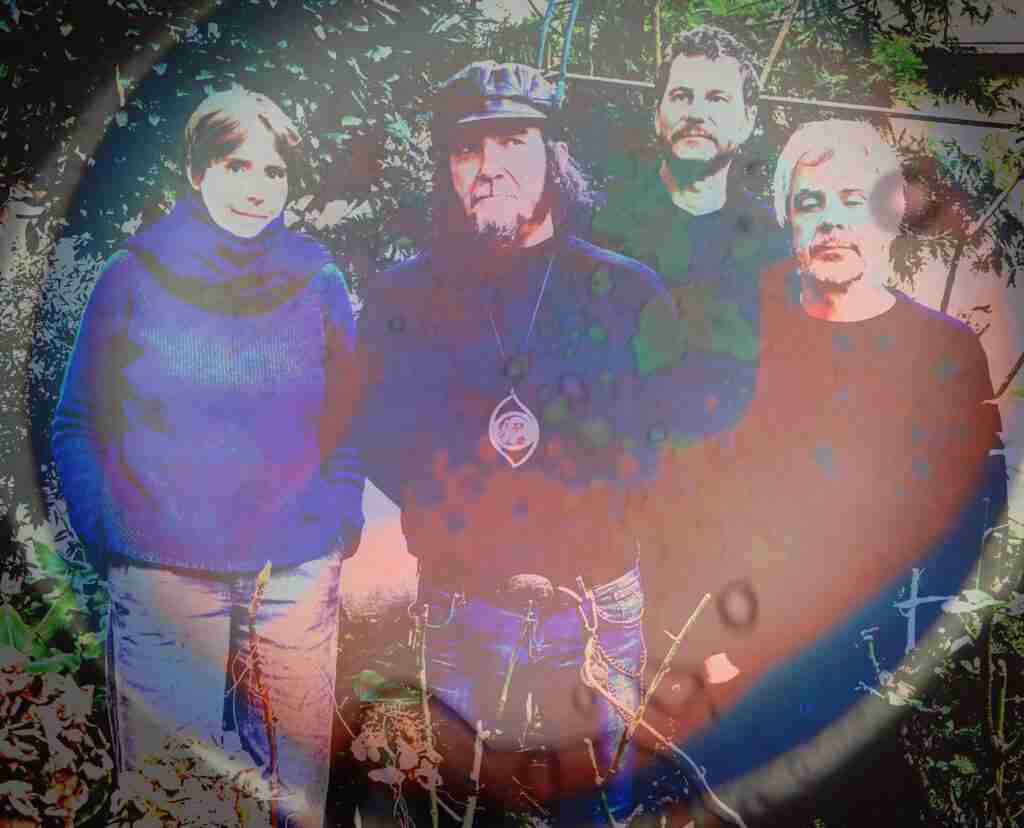
Giorgio Li Calzi
My passion for electronic instruments exploded around the age of 15, when, instead of a moped, my parents gave me a drum machine, the Roland 808, but I already had some “cheap” Italian synthesisers, such as the Siel and the Crumar. From then on, before devoting myself to the trumpet and jazz, I had the chance to broaden my knowledge of and passion for electronics, which has never left my productions and of which my collaboration with Wolfgang Flür of Kraftwerk and the one with Frank Bretschneider are examples. A few years ago I finally had the opportunity to buy my first Buchla synthesiser. The stimulus had come from a chat with Titta, a Turin DJ and producer linked to the techno scene. In a completely chance encounter I had spent a long time talking with him about modular synthesisers and had discovered that the Buchla, invented in the early ’60s, was still in production.
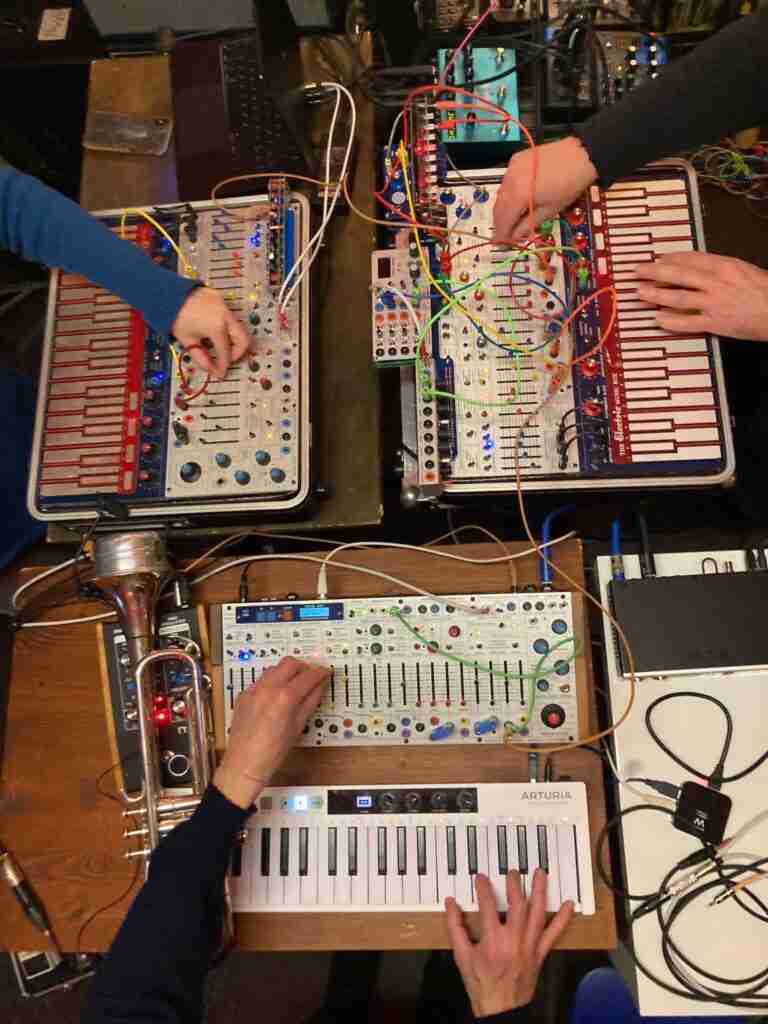
So I found myself at Martin Pas, an electronic musical instrument shop, a sort of Turin mecca for devotees of oscillators, and it was the guys in the shop who told me that there was a musician in town who owned another Buchla, Sara Berts. After hearing her work I asked her to give me lessons, despite her very kind reluctance and discretion, and in the end, being a brilliant artist, I involved her in playing at the Torino Jazz Festival and at CHAMOISic, the festival I have organised every summer for 15 years in the Aosta Valley.
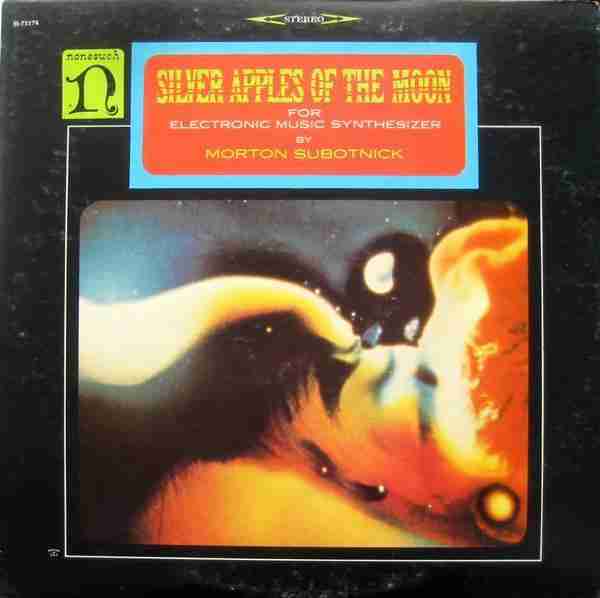
Later, talking with Paolo Dellapiana, who is also a convert to the Buchla gospel, the project was born of forming a trio based on an instrument like this, with its articulated expandability and important variety of timbre. Rehearsal after rehearsal, preparing the suite we will play for Seeyousound, we have explored in depth its very personal soul and musical uniqueness, but we have also understood just how complex an instrument it is. For his first record, Silver Apples of the Moon (Nonesuch, 1967), the first electronic music album in history commissioned by a record company, Morton Subotnick shut himself away in the studio for as many as 13 months, working 12 hours a day. That is certainly not our case, but to get the three synthesisers to talk to each other as well as possible Paolo Dellapiana’s input has proved invaluable, as he is a master of connections.
Last year, when I discovered that the documentary on Morton Subotnick had been presented in Berlin, I spoke about it with Juanita Apraez Murillo and Riccardo Mazza of Seeyousound. I must thank the curator of the LP DOC competition, Paolo Campana, who, besides asking us to build the event, had the intuition to involve Giampo Coppa in the project for the visuals. This allowed us, while maintaining coherence with the visual framework of the film, to embark on a path different from the type of images that usually accompany performances with this kind of electronic music. In this regard, the film mentions a certain Tony Martin who in the ’60s was the visual director of the San Francisco Tape Music Center. He was the first to use, at hippie happenings, the technique that inspires Giampo Coppa in an absolutely unique way.
Paolo Dellapiana
The first time I sensed the possibility of modifying a sound I was 12, and it happened by putting my hands, almost by chance, on the big platter spinning on my parents’ record player. The distortion that resounded was a surprise and a thrill. Since then the enchantment with every kind of sound box and manipulation has become irresistible. How could we not answer the “call” of one of the fathers of experimentation, all of us owning an extraordinary Buchla? It is a sort of return “of the analogue”, but beware: not a return “to the analogue” as opposed to the digital, but a crossing rich in history and contemporary at the same time. The starting point of the Solar Pulsers is precisely this union of infinite possibilities. The liquid images projected from Giampo Coppa’s overhead projector also feed the analogue spirit of the performance, heightening the atmosphere of pungent research in honour of Morton Subotnick. It will be an evening that looks ahead on the shoulders of memory.
Giampo Coppa
My BRAINLIGHT Liquid Light Show was born on 30 September 1989 in El Paso on the occasion of the first PSYCH-OUT PARTY, a monthly sixties-psychedelic-themed event that later turned into an annual music festival with bands, performances and DJs. I started with slide projectors. Into the slide frames, which I took apart, I put liquid colours and oil, and once closed again I slid them into the magazine: with the heat everything mixed together as it was projected, creating strange coloured shapes. Then I modified the projector, removed the lens and created a support onto which to load coloured filters directly, again with oil inside: the effect was total! To this I also added a Super-8 film projector on which I had mounted a large reel with various pieces of film running in a loop: the liquid lights blended with the images.
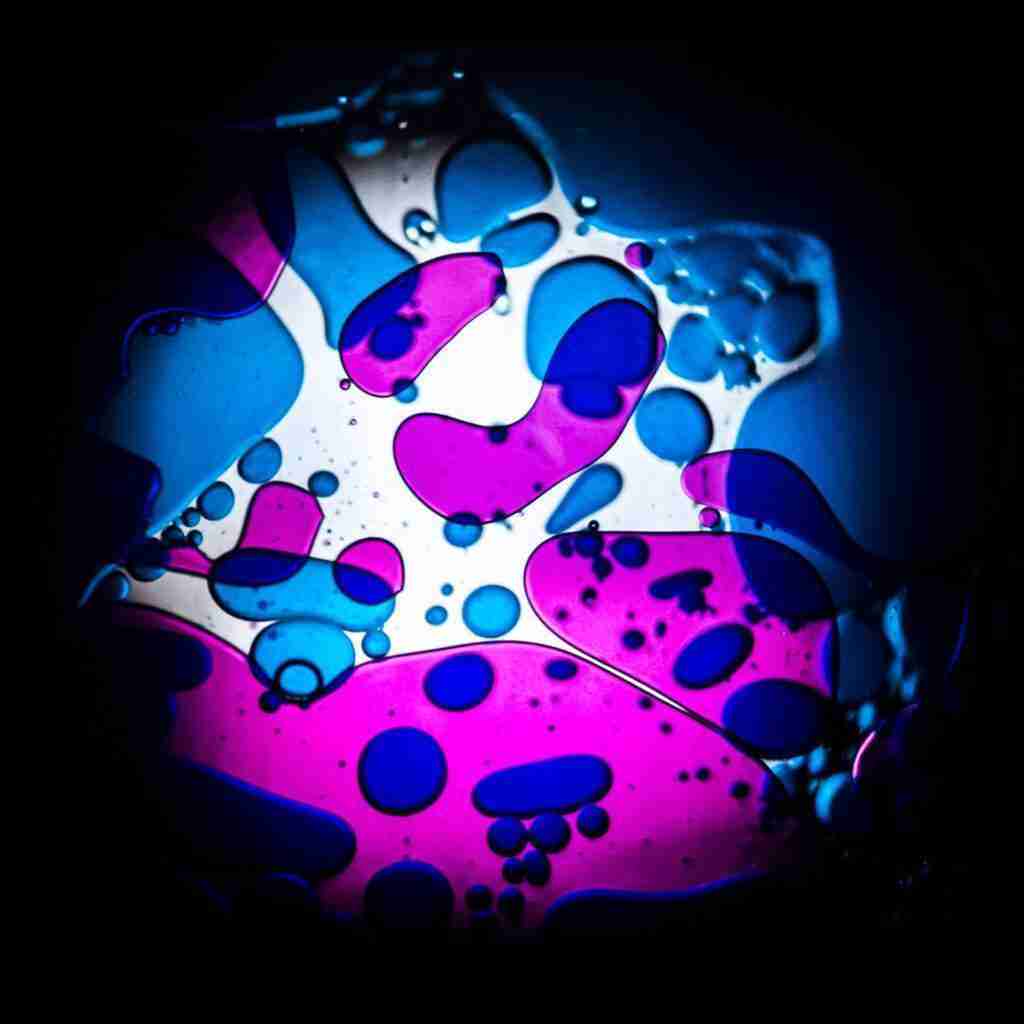
With this combination I took part in raves and techno nights and in 2000 I took part in the video for “La canzone che scrivo per te” by Marlene Kuntz with Skin of Skunk Anansie, directed by Beniamino Catena. All this came about thanks to my passion for the Sixties, a fantastic period in which people were constantly experimenting. From 2014 to 2017 I then shared my experience with Ricky Iconout, to the point of turning it into a project called Brainillusions in which we also began to use overhead projectors. I was inspired by the liquid light shows I saw in footage from the ’60s, from B-movies to concerts, such as the documentary on the Monterey Pop Festival. When I started there was no internet and to find things you really had to dig. On the various filters I found and mounted on the projectors there was often the inscription Psychedelic light Bruno Contenotte, which intrigued me, and I discovered that the name referred to a figure from the ’60s, almost unknown in Italy, who in the United States had lit up famous nightclubs such as the Electric Circus in New York, where the Velvet Underground performed. The colours I use for the liquid light show, mixed together with the oils under the heat of the overhead projector lamp, produce mutating shapes that I can intervene on manually, playing with the rhythm of the music. Some of these colours come from the Joshua Light Show, known for the “visuals” of bands such as Jefferson Airplane and the Grateful Dead, during the Summer of Love of 1967.
The electronic music live set with the Solar Pulsers is an excellent opportunity to put this technique into practice, and I also find myself in it because of my personal background, of which Paolo Campana, who involved me in the project, was aware: the passion for the analogue synthesisers that I played in the ’90s with my space rock band Amanitas Quasar.
Subotnick: Portrait Of An Electronic Music Pioneer (Italian Premiere)
24 febbraio 20.30 – Cinema Massimo
28 febbraio 16.00 – Cinema Massimo
- Director: Robert Fantinatto
- Fotografia e montaggio:Robert Fantinatto
- Liquid light effects: Aidan Fantinatto
- Music: Morton Subotnick, Steve Reich
- Anno: 2022
- Paese: Canada
- Durata: 87’
- Lingua: inglese (v.o. sott. It)


