
In a mining town in northern Sweden, four young rappers fight for their recording studio, threatened by unstable ground. Their struggle represents a generation facing a fragmented, torn world.
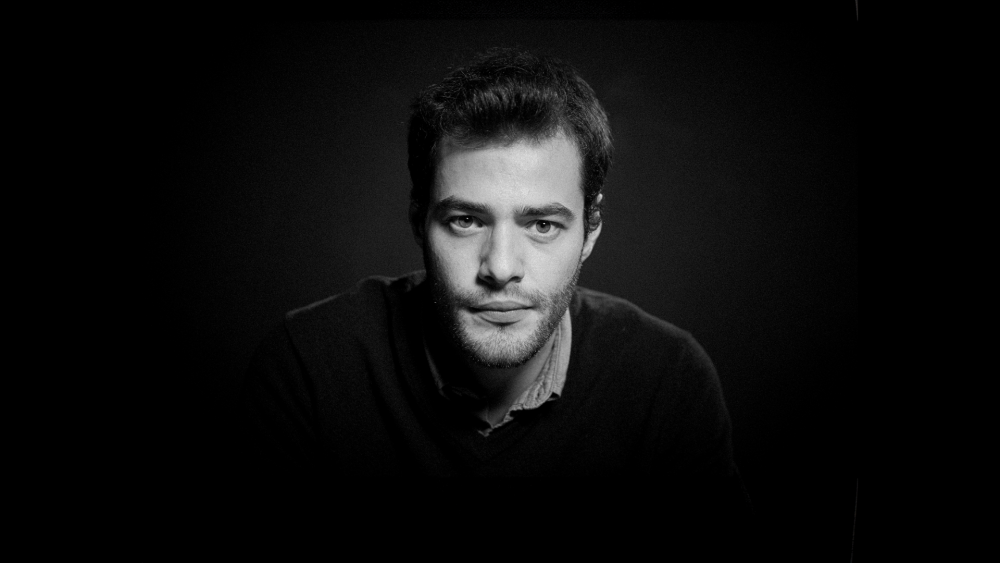
On the occasion of the screening of Tusen Toner within Seeyousound’s international short film competition, we interviewed director Francesco Poloni, who is Swiss of Italian origin. After exploring academic paths in psychology and architecture, he recognises in cinema a language capable of integrating analytical and analogical thinking. Having graduated in directing in 2025 from the CISA, Conservatorio Internazionale di Scienze Audiovisive di Locarno, in his work Poloni reflects on the relationship between the individual, the community and the contexts that surround them.
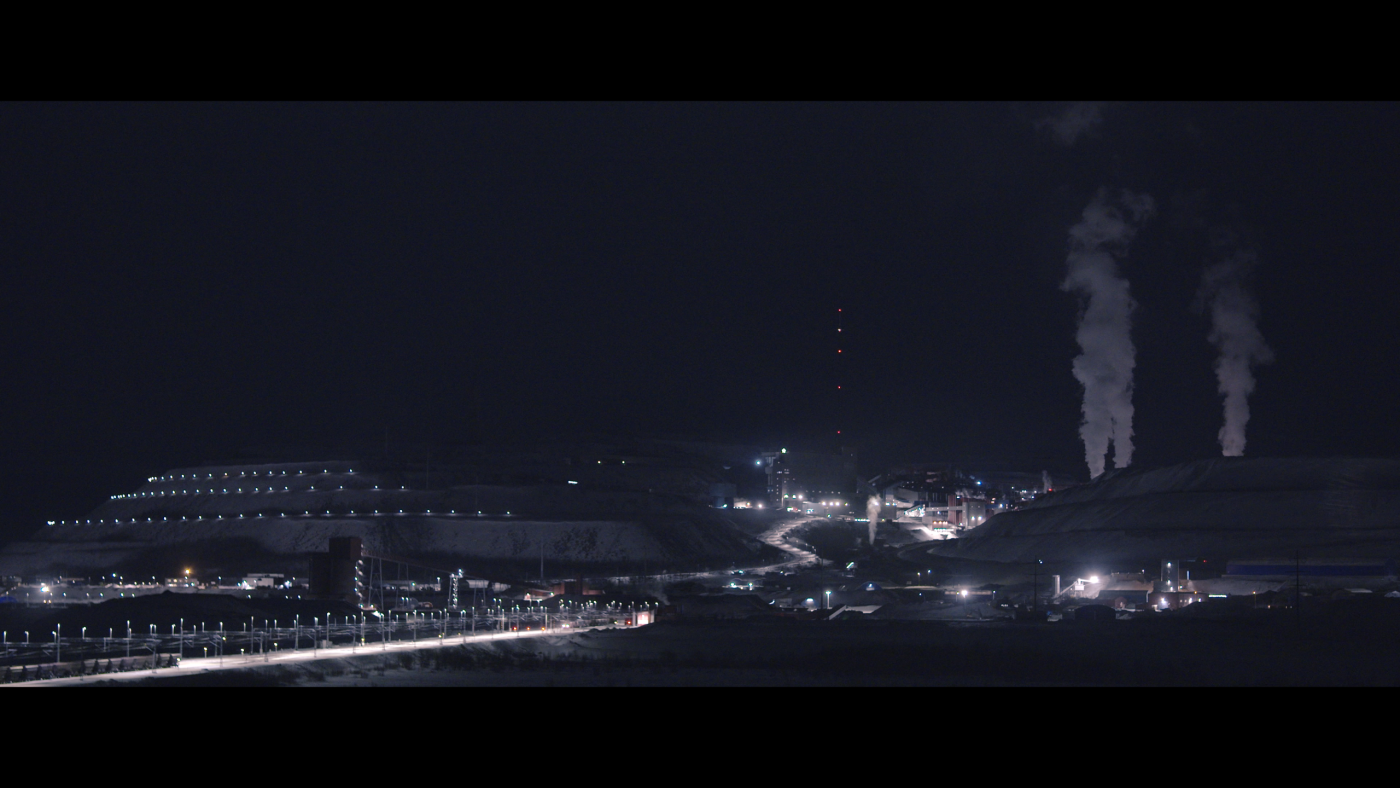
The short film documents the story of Kiruna, a town in northern Sweden that supplies over eighty per cent of Europe’s iron and in which the continent’s largest vein of rare earths has been discovered. In this setting, four young rappers question the future while the fate of Tusen Toner, their recording studio, is by now sealed because of the instability of the subsoil. In a world fragmented by new conflicts generated by competition for strategic resources, dreams of prosperity shatter and the boys’ stories resonate with those of an entire generation forced to confront the end of its certainties.
One of the film’s merits is that it sheds greater light on Kiruna and on the process of relocation it has been undergoing, if I am not mistaken, for over twenty years. How did your interest in the theme of the exploitation of mineral resources come about?
My interest in this subject comes from two different strands that, at a certain point, came together. The first is very personal. For years I have been questioning the relationship between technological development, the environment and geopolitics. The climate issue is one of the great challenges of our time and I believe that, if you look closely at European technological evolution, it becomes evident how much elements such as lithium and so-called rare earths are by now strategic resources. They are limited materials, indispensable for the production of batteries and of technologies linked to the energy transition, but Europe today does not possess sufficient quantities of them. This imbalance inevitably opens up very complex geopolitical questions. The second decisive moment was coming across an investigation by Report, the programme hosted by Sigfrido Ranucci. In one of the reports, a gigantic lithium refinery in Indonesia was shown and, through that story, a contradiction emerged that struck me very much: Europe strongly promotes the idea of a green transition, pushing towards electric cars and ever more sustainable technologies, but at the same time it is unable to produce autonomously many of the raw materials required. This means that we often buy batteries or components from China, and behind those technologies there are extractive supply chains very far from us, with environmental and social costs that remain invisible. What interested me was not so much to criticise the collective desire to move towards a more sustainable model, as to question the real price of that dream. Every energy transition inevitably has consequences, and often those consequences are shifted elsewhere. At first I had thought of telling these dynamics directly in the places of extraction, on the other side of the world. But I realised that this would also have entailed risks. On the one hand, the danger of an external gaze that is too distant, almost a cultural appropriation; on the other, the concrete limit of telling contexts whose language, culture and social dynamics I did not truly know.
So I began to look closer to home, inside Europe itself. And that is where I discovered Kiruna, this small town in northern Sweden that for over twenty years has been going through a unique process: the gradual relocation of the entire urban centre because of the expansion of the mine. When I discovered Kiruna’s story, it seemed to me I had found the perfect meeting point for all the questions I was carrying with me. There was the geopolitical dimension linked to mineral resources, but also a profoundly human dimension. For me it was essential that the film should not speak only of large economic or energy systems, but should have direct contact with people. I believe that when dealing with very broad themes it is essential to have real, concrete protagonists through whom the viewer can enter the story emotionally. In this sense Kiruna seemed to me the ideal place, a space where global issues and individual lives meet in a very tangible way.
It is held that meaning emerges from oppositions and contrasts, and this film is indeed full of them: the exterior, urban shots, wide, glacial and observational on the one hand; the interior ones, warm and participatory in the recollection of a recording studio, on the other. Or the dialectic between destruction and creation provided by the elements of drilling and of songwriting. How did you find the balance between the macro dimension (the treatment of transnational energy policies) and the micro dimension (the youth portrait) of your story?
Bringing these two dimensions together was probably one of the most complex aspects of working on the film. The first thing to do was to understand what these two scales of the story, the macro one, linked to the geopolitics of resources, and the micro one, linked to the lives of the boys, had in common and where, instead, they came into tension. It is also important to say that this kind of balance is never born of solitary work. Cinema is not a one-man show, but a collective effort. In this case the exchange with the editor, Davide Macchi, was decisive. He had not been with me in Sweden during the shoot, but he had followed the whole development of the project, and precisely this outside perspective allowed us to reason about the material with greater clarity. The starting point was to identify a theme that could hold both dimensions together. At a certain point I realised that the film, at bottom, revolved around a very simple idea: the price of dreams.
On the one hand there is José, our protagonist, who dreams of finding his own path through music. For him rap is a way of expressing himself and building an identity, but pursuing this dream has a price. It means continuing to fight, continuing to “push”, as he puts it, even when everything around him changes: the city is moved, the studio is demolished, and in the end he finds himself recording songs with a sock over the microphone. Despite everything, he keeps going. In this sense José is an extremely courageous protagonist, and he brings a very strong human dimension to the film.
On the other hand, on a completely different scale, there is a collective dream. It is the dream of a society that wants to change course in the face of the climate crisis and leave future generations a better world. But this dream, too, has a price. To produce batteries, to build electric cars and more sustainable technologies, raw materials are needed and therefore mines.
At that point the question inevitably becomes political: either we continue to extract these resources in distant countries, often in very harsh conditions for workers and for the environment, or we decide to do so in Europe, directly taking on the consequences of these choices. And this can mean, as in the case of Kiruna, moving entire parts of a city or radically transforming the landscape. In both stories, then, the same question returns: how much are we willing to pay to achieve what we desire? Once this deep link was identified, the work that followed was above all a work of rhythm and balance. In the edit we tried to build a constant dialogue between these two dimensions, alternating the open spaces of the city and the mine with the intimacy of the recording studio, creating moments of silence, leaving room for gazes and environments. It was a very precise process and at the same time a very intuitive one, made of reflection but also of sensitivity. First you identify the thought that underpins the film, and then you try, through the language of cinema, to let it emerge naturally.
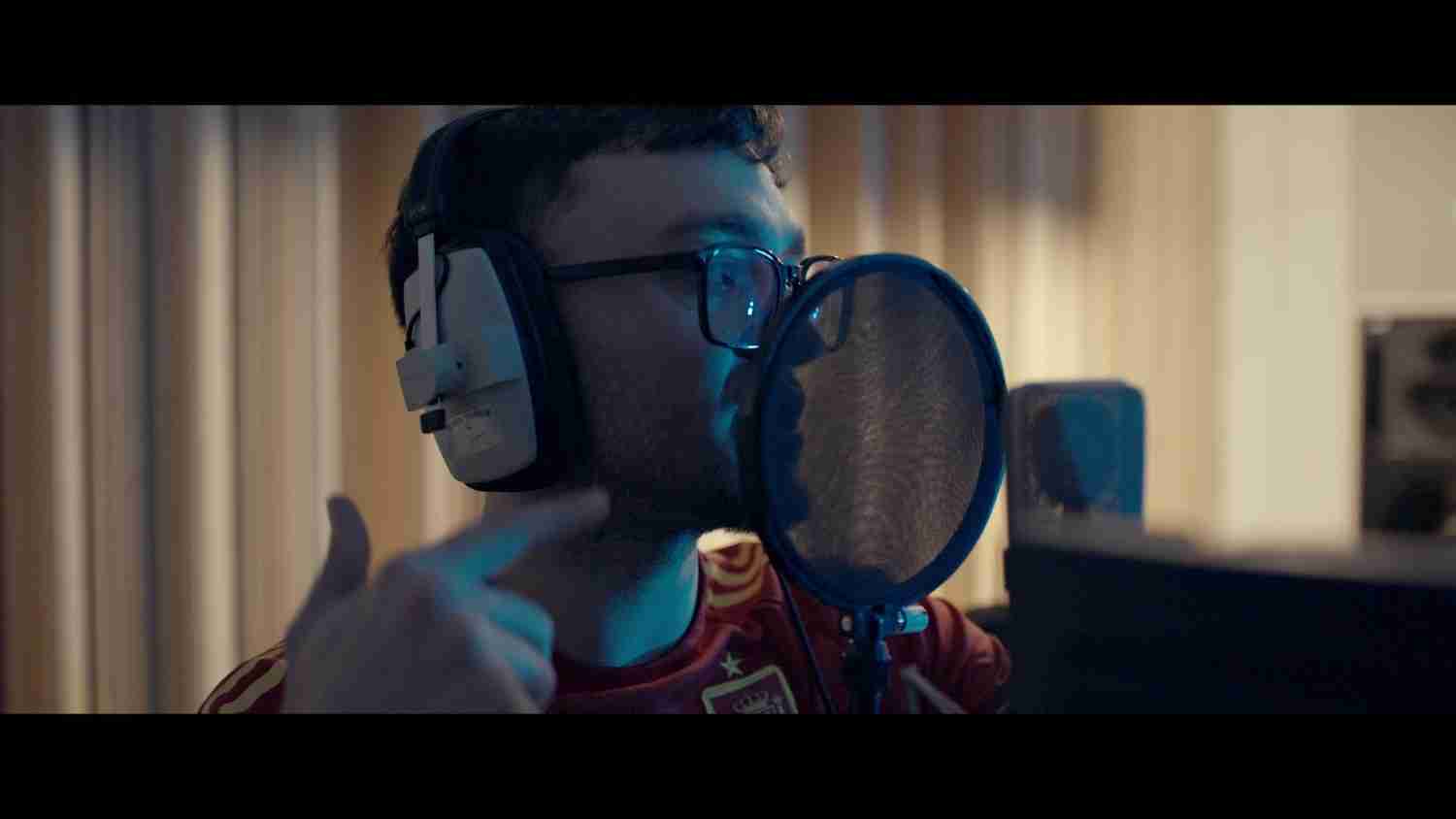
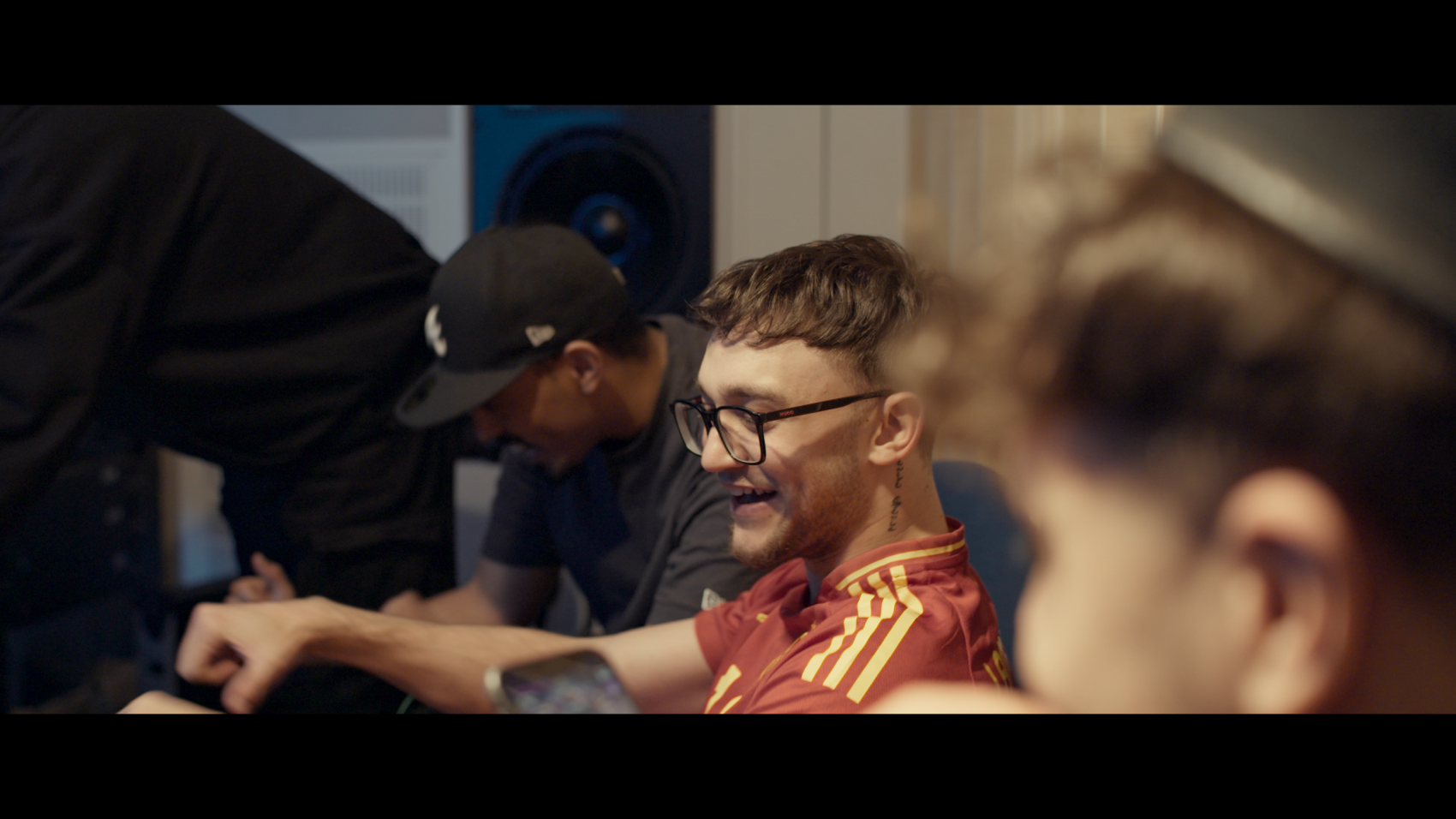
This sort of inexorability that one breathes in the film, which concerns first and foremost the relocation of the town (a process under way but from which there is no turning back), inevitably also falls on the lives of individuals. How did you come to know José, Khaled, Apas and Melvin, the young protagonists of the film?
As often happens in documentary, meeting them was not planned from the start. Paradoxically, we did not start from the protagonists. The film was born from much more abstract reflections; I came to it with questions linked to geopolitics, to the issue of mineral resources and to a feeling of responsibility regarding what is happening in Europe today. When I discovered Kiruna I understood that it was the right place to tell this complexity. But at the same time I knew that, in order to really do it, I needed someone who lived that reality from the inside. Someone who could transform those big ideas into human experience. For this reason we began, very simply, by contacting young people in the town. It was important to me that they be young; I did not want to make a “mineral” film, focused only on the mine or on infrastructure. I needed a vital gaze, someone who had dreams, who was looking for their own path within that very particular context.
When we met José, Khaled, Apas and Melvin, something very hard to explain happened. At the beginning there is always a moment of intuition, almost of instinct, in which you sense that perhaps you have found the right people. Then, little by little, you begin to talk to them, to build a relationship, and you discover a world. It was a very natural process; it was not planned in detail, but at the same time it was not mere chance either. I believe that in documentary one must look for things with great determination and then know how to recognise when one finds something special. Meeting them was, in this sense, a true gift. They are extraordinary people and I am deeply grateful to have been able to tell a part of their lives. In documentary, indeed, the relationship of trust with the protagonists is fundamental. When someone agrees to take part in a film, they are entrusting you with something very delicate: their own image, their own story, often their own vulnerability. It is an enormous responsibility for whoever directs the film and for the whole crew.
An episode that was very significant for me concerns precisely this relationship of trust. Throughout the whole production process the boys never asked to see the film in advance. They did not want to control the edit or to know how it was taking shape. They trusted that we were doing our best to tell their reality. The first time they saw the film was at the international premiere at the Locarno Film Festival. They came from Sweden to be in the theatre with us. For me it was a very intense moment, because on the one hand the film was being shown to a large audience for the first time, but on the other it was also the first time the protagonists were seeing it. I remember perfectly José watching the screen and recognising his spaces, his music, the emotions of that period. At that moment I understood that the film had worked. Seeing that they recognised themselves in the story was perhaps the greatest satisfaction this project has given me.
In them it is possible, if one wishes, to glimpse a generational crisis characterised by the clouding of the future and by a sense of powerlessness in the face of processes and directives whose effects are global in scale. How much do you feel this crisis to be your own?
Yes, in part I feel this crisis very much as my own. Naturally the lives of the boys in the film are different from mine, and so are their dreams, but I believe the underlying feeling is shared by many of our generation. If, however, we widen our gaze, this feeling does not concern only young people. I have the impression that the whole of society is going through a phase of great transition and great complexity. We live in a historical moment in which many points of reference are changing: environmental transformations, geopolitical tensions, technological transformations. All this contributes to creating a widespread perception of uncertainty about the future. In this sense the feeling that runs through the film is not only generational, but almost universal. It is that silent question many of us ask ourselves: what kind of world are we building and what will be our place within this change?
What strikes me about the boys in the film, however, is the way they react to this uncertainty. Despite the difficulties, they keep looking for a direction. They keep dreaming, creating music, imagining a possibility for themselves. There is a very strong form of courage in this. From this point of view José and the others have taught me a great deal. Their attitude is not to give in to the feeling of powerlessness, but to keep pushing, to use a word that often recurs in their songs too. And this is perhaps the element I hope will reach the audience as well: the awareness that the future may be uncertain, but that precisely for this reason it requires participation, determination and courage.
Tell us also about the music and the role it plays in the film: it seemed to me that, for the boys, rap (and art in a broader sense) serves as an expressive channel, almost an antidote to the rupture of identity caused by feeling the ground (literally) disappear from beneath one’s feet.
Music in the film became much more than a simple narrative element. At first I imagined it almost as extradiegetic support, something that could accompany the story and help build the emotional atmosphere of the film. But when I began to really get to know the boys and to spend time in their world, I understood that music had a much deeper meaning for them. For José, in particular, music is a true expressive channel. It is the place where he pours out his emotions, his fears and his dreams. It is the way in which he communicates and manages to open up. For this reason it was essential not to use music merely as a commentary on the film, but to show the way in which they live it.
In this sense, Tusen Toner was not just a recording studio. It was an artistic home, but also a second home in the most concrete sense of the term. The boys spent most of their nights there, writing, recording, listening to music. It was a space of freedom and belonging, a place where they could be fully themselves. When I understood this, it became natural to let music enter the film as an integral part of the story. The song we see being recorded in the film, for example, is the last one the boys composed inside Tusen Toner before its demolition. At that moment I began to think that the film could also become a kind of memory for them, almost like a photograph of something that was disappearing. Because Tusen Toner was not the only place they were losing: with the transformation of the town, other spaces of their daily life were also disappearing: the school where they had studied, the bars where they met as teenagers, the little places of the neighbourhood. Entire parts of the town where they had grown up were changing or vanishing, so Tusen Toner becomes almost a symbol of this transformation. And it is music itself that brings that place to life: without their songs and without their presence, that space would not have the same meaning.
For me, working on this level of the film was very delicate, because it meant handling something extremely intimate. In the boys’ music there were their emotions, their fragilities, but also their desire to grow and to find a direction. It was important to convey this strength, but also the vulnerability that exists within that creative process. After all, their music too lies within the same tension that runs through the whole film: on the one hand the desire to build something new, on the other the awareness of living inside a transformation far bigger than themselves.
The short film does indeed offer us a great opportunity to talk about spaces and community, a very hot topic in the Turin context too, where the film will be screened at Seeyousound. As we speak, I imagine the demolition of the studio has already been carried out. How much (and why) is it important to preserve and nurture gathering places such as Tusen Toner?
Yes, a few months after our shoot Tusen Toner had already been closed and dismantled. And the process of transformation of the town is still going on today. In Kiruna entire neighbourhoods are being progressively demolished or moved to allow the mine to expand. Some symbolic buildings, such as the town’s historic church, are even being lifted and moved elsewhere. The buildings where José lives today have also been closed and are being torn down. It is a process that can hardly be stopped, because the economic interests tied to those resources are enormous. Within this context, Tusen Toner represented much more than a recording studio. It was a gathering space, a place where the boys could meet, spend nights together, make music and feel free to express themselves. It was, in a sense, a second home. But I think the issue goes beyond the specific case of Kiruna. In general, for young people, and I would say for anyone, having places to gather is fundamental. They are spaces where people can get to know one another, engage with each other, discover who they are and develop a voice of their own. They are places where one can feel safe, where one can experiment, create and imagine the future. When these spaces exist, it is not only individuals who grow. The community grows too. Because a society that offers young people places in which to express themselves and meet is a society that invests in its own cultural and human vitality.
In this sense, the loss of Tusen Toner is not only about a recording studio closing, but also about the disappearance of a space in which a community could recognise itself. And this is something that concerns Kiruna, but which at bottom speaks to many other cities as well.
You made this work as a diploma project, measuring yourself against the limits and potential of the short film. What do you consider to be the strengths of short-form storytelling?
The short film has several strengths, even if at first it may seem a very limiting form. Fifteen minutes is a narrow narrative space, and this can give the feeling of working within an almost claustrophobic structure. In reality, this very limit becomes a great resource. Working on a short narrative forces you to make a very strong effort of understanding and synthesis. You have to question yourself with great precision about what you have filmed, understand what the centre of the story is and what form the final film may take. This also affects the way you shoot: when you work on a short film you are forced to have a great awareness of form already during filming. At the same time, the short format can be extremely incisive. Some stories work better when told in a direct, almost frontal way. The short film allows a more concentrated, more dynamic, sometimes even more frank narration. In a feature film of ninety minutes or even two hours, this kind of intensity risks at times being diluted. Naturally there is also an important difficulty. Managing to create empathy between the viewer and the protagonists in such a short space is a complex challenge. But precisely this challenge becomes, in turn, a narrative possibility.
For me, moreover, the short film also has great formative value. It is a form that forces you to stay lucid and focused, to truly understand what the heart of a story is. In this sense it is a fundamental training ground for a director: it obliges you to build very precise narrative mechanisms that can then, eventually, be developed and expanded in a feature film as well.
Would you like to tell us about what you consider to be your major influences in the field of documentary, also (but not only) with respect to the making of this film?
This is perhaps one of the hardest questions for me, because my relationship with documentary is very open and draws on registers very different from one another. I love documentary cinema in many of its forms, from the more investigative and geopolitical documentaries to the more observational ones, and on to the more visual and experimental ones. I always try to watch a lot and to let myself be contaminated by different approaches.
A director I admire a great deal is definitely Laura Poitras. In her films, such as Citizenfour, Cover-Up o All the Beauty and the Bloodshed, I find extraordinary the ability to tackle extremely complex geopolitical themes while maintaining at the same time a strong human and narrative dimension. It is a cinema that manages to question power and political structures without losing contact with individual stories.
At the same time I am also very attached to more classic documentary-makers such as Werner Herzog. In his films there is an almost visceral dimension to the relationship between man and the world. I am thinking of works such as Encounters at the End of the World o Lessons of Darkness, where landscape and human experience become deeply cinematic elements. Another author I am very interested in is Joshua Oppenheimer, above all for the radical way in which he deals with memory and violence in his work.
Alongside these references there are then directors who work in a much more visual and formal way, such as Yuri Ancarani. Films like Il Capo o San Siro show how documentary can also become a strongly cinematic experience, built through the rhythm of images, spaces and gestures.
Finally, I also feel very close to the work of Gianfranco Rosi, for his ability to observe places and communities with a patient, almost immersive gaze.
In reality, I find it hard to identify with a single model. I believe one can always learn something from documentary, even from films very far from one’s own sensibility. Looking at the work of great authors means above all trying to understand what tools they use to tell reality, and then finding a personal way of making them dialogue with one’s own cinema.


