Featuring indigenous women of various generations, Pidikwe integrates traditional and contemporary dance in an audiovisual whirlwind that straddles the border between film and performance, somewhere between the past and the future.
On the occasion of the screening of Pidikwe in the International Short Film Competition at SEEYOUSOUND, we spoke with director Caroline Monnet.
Caroline Monnet is an award winning multidisciplinary artist based in Montréal. Her work has been programmed extensively in festivals and museums around the world, including Toronto International Film Festival, Sundance, Berlinale, Göteborg and Rotterdam, as well as the Whitney Biennale, Frankfurt Kunsthalle, Montreal Museum of Fine Arts and the National Gallery of Canada. She was selected for the Cannes Festival’s Ciné fondation residency in Paris. She received the Sundance Institute’s Merata Mita Fellowship and was named compagne des Arts et des Lettres du Québec.
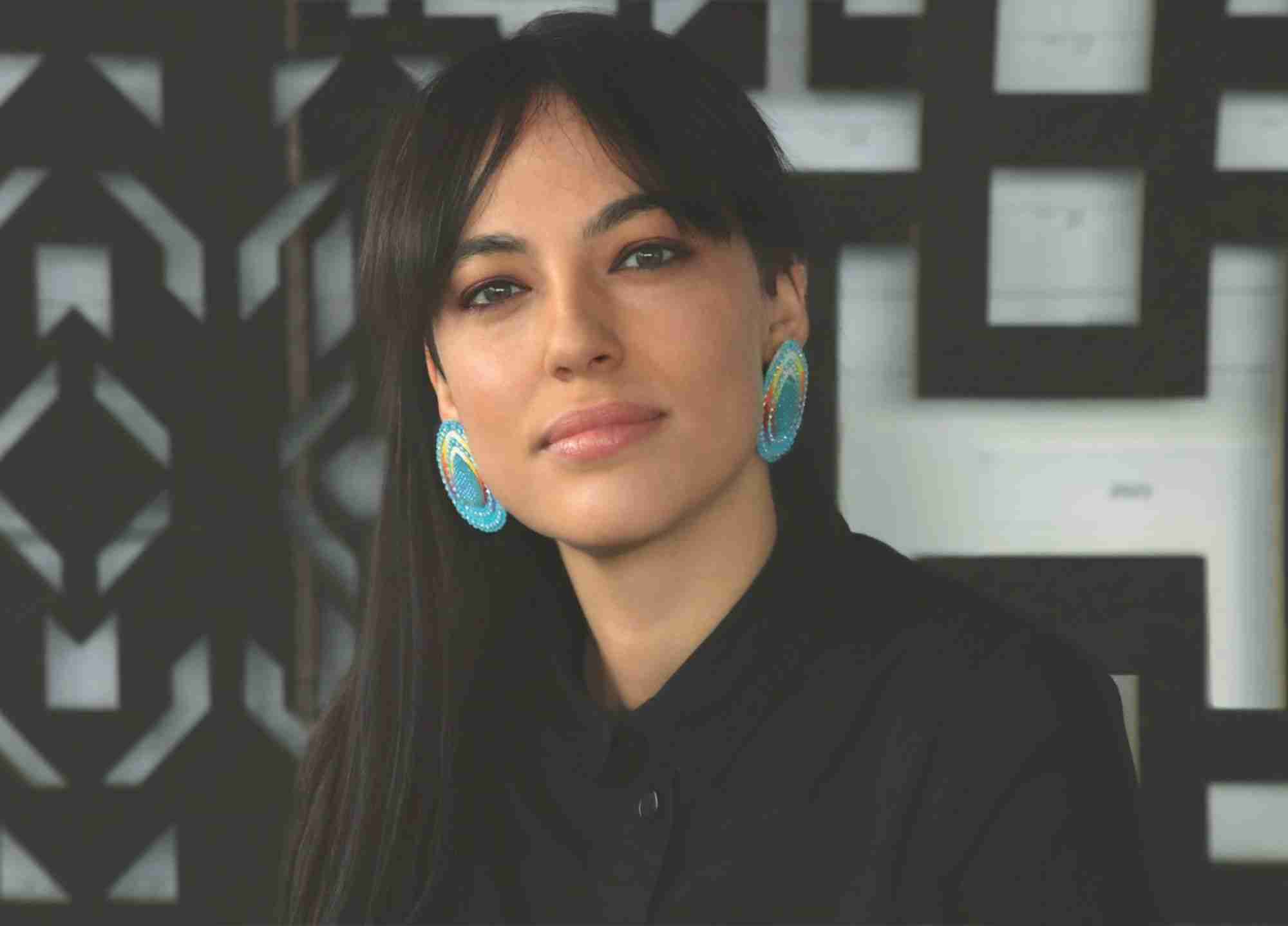
One of the central—if not the defining—themes of your overall body of work is the reclaiming of Indigenous’ imagery through liberation from the colonial gaze and oppression. How did Pidikwe come about, and how does it fit within this ongoing trajectory?
Pidikwe came out of a deep engagement with memory and resilience. I’ve always been drawn to the idea that Indigenous imagery—our symbols, our forms, our gestures—carries knowledge that colonial frameworks have tried to erase or distort. With Pidikwe, I wanted to push that reclamation further: to create a space where Indigenous narratives, aesthetics, and movement aren’t just present—they’re active, asserting themselves outside the lens of the colonizer. The work plays with abstraction and corporeality in ways that feel like breathing back the energy that has historically been taken from us. It’s about asking audiences to look differently, not just at what is “Indigenous,” but at the frameworks that define how we are seen. Pidikwe is both continuation and expansion: continuation in its insistence on reclaiming imagery, expansion in its embrace of collaborative and performative dimensions—showing that decolonization isn’t only a visual act but a bodily, spatial, and experiential one as well.
Why did you find the Roaring Twenties to be a particularly meaningful reference for inspiring and conveying the act of female empowerment embodied in the film?
The Roaring Twenties felt like a powerful touchstone because it was a moment of rupture—a time when women were publicly claiming space, experimenting with new forms of freedom, and challenging rigid social norms. For me, referencing that era wasn’t about nostalgia; it was about resonance. The energy of the twenties—the jazz, the movement, the audacity—mirrors the kind of female empowerment I wanted to explore in the film. There’s a radical optimism in that period, but also a tension: women were breaking out of prescribed roles, yet the structures of power were still deeply entrenched. That duality reflects contemporary struggles as well, particularly for Indigenous women whose stories and bodies have historically been surveilled and constrained. By channeling the Roaring Twenties, we could evoke that electric, boundary-pushing spirit, while also acknowledging the ongoing fight for autonomy, visibility, and liberation. It’s a historical echo that amplifies the contemporary act of reclamation—showing that empowerment is both a celebration of freedom and a defiant assertion of presence in spaces that have tried to exclude you.
In the all‑female ensemble performing in the film, you appear alongside Indigenous poet Josephine Bacon. What is your relationship with her, and what was it like to collaborate on this project?
Working alongside Josephine Bacon was profoundly grounding and inspiring. I’ve admired her work for so long—her poetry carries such a deep, layered understanding of language, memory, and place. There’s a quiet power in her presence, and that translated on set into a kind of rhythm and integrity that the rest of the ensemble responded to. This is not the first time I’ve worked with Josephine, and she has become an important matriarch in my life. Our relationship is rooted in mutual respect and a recognition of the importance of intergenerational dialogue. The collaboration with all these women reminded me that reclamation and empowerment aren’t solitary acts. They’re communal, they’re relational, and they gain resonance through shared presence. Being in that space with Josephine and the all-female ensemble was, in a way, a continuation of the broader work I’ve always been drawn to, asserting visibility, voice, and agency collectively, not just individually.
I was particularly struck by the costumes in the film. Did the practice of beadwork play a central role in their creation?
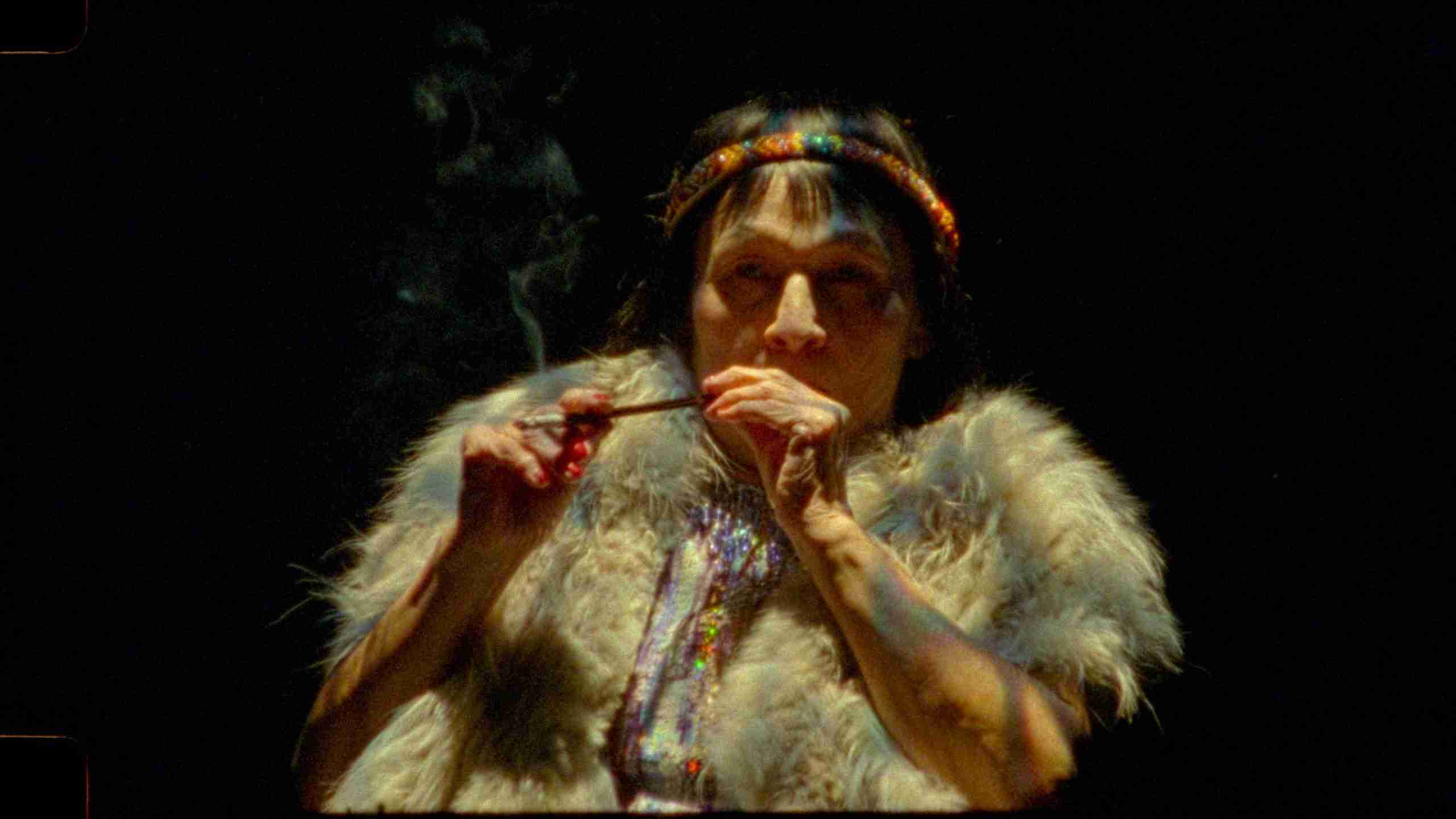
The act of creating the costumes was itself a form of storytelling—a way to embed Indigenous knowledge, memory, and presence into every stitch. I wanted each piece to serve as a bridge between the contemporary and the ancestral, carrying forward traditions as a living, breathing medium of resilience and identity. Every costume, every bead, every fringe, became a small act of resistance, a quiet declaration of continuity and survival. The costumes were crafted by my long-time collaborator Yso South, whose attention to detail and understanding of these histories was essential. From the beginning, I envisioned garments that could move with the performers—allowing freedom, fluidity, and expression—while also being visually striking in colour and texture. The 1920s served as a point of inspiration, a reference for energy, style, and audacity, but the work had to simultaneously carry Indigenous representation and speak to the present. The challenge—and the joy—was in weaving these layers together: historical reference, cultural continuity, and modern expression, so that the costumes themselves became a living extension of the film’s themes of empowerment and reclamation.
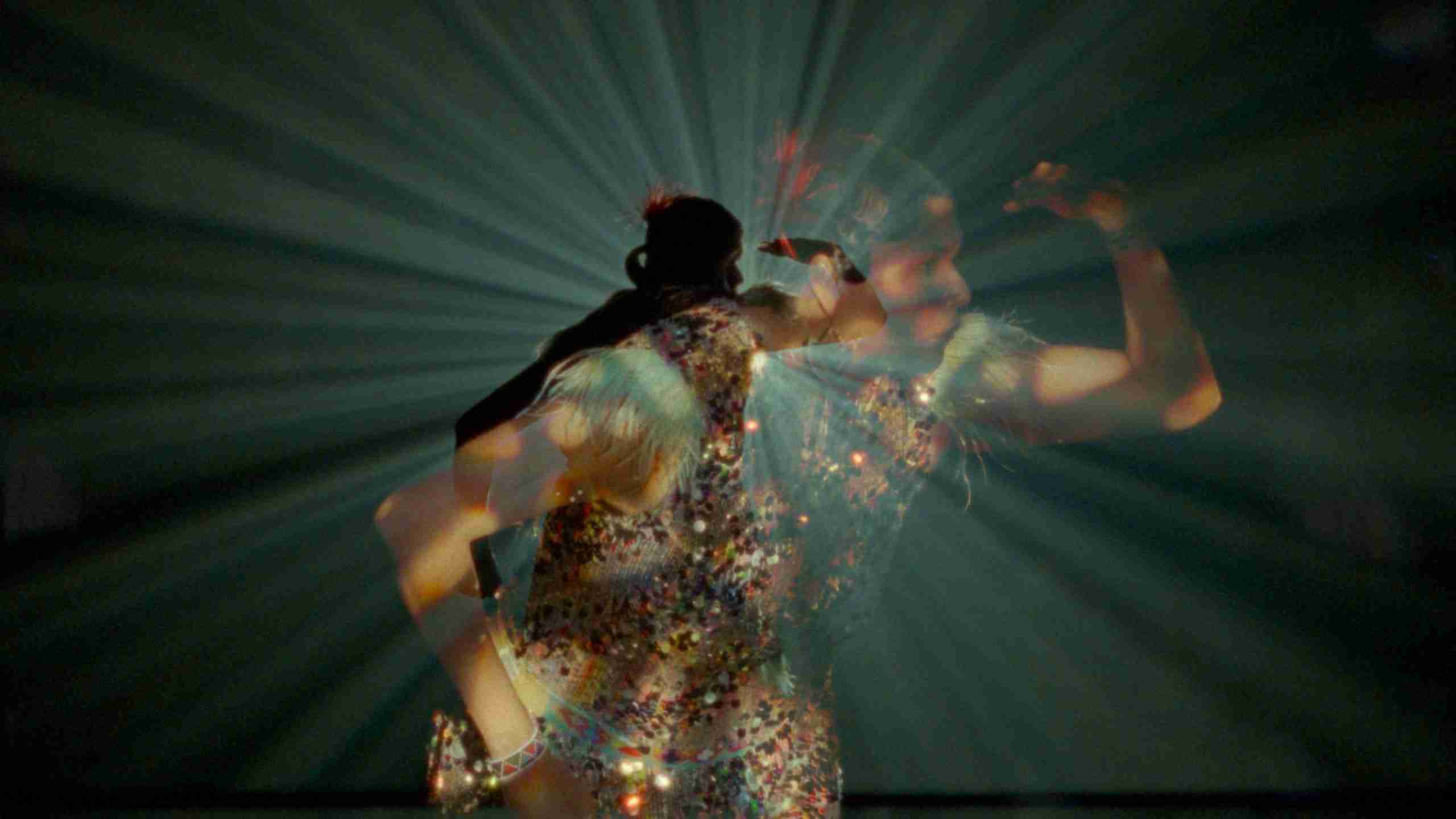
In this work, the evocative power of dance leaves no room for words, fully claiming the stage for itself. Was the elements of powwow re‑arranged and blended with contemporary dance, or is it presented in a more traditional, unaltered form?
In this work, the dance is the language—it carries the story, the memory, and the presence in ways that words simply cannot. The elements of powwow were intentionally reimagined and blended with contemporary movement. I wanted to honor the traditions, the energy, the rhythms, but also to place them in dialogue with a contemporary, embodied form that reflects today’s Indigenous experience.
The powwow elements provide a foundation—a pulse, a cultural memory—but they are interwoven with gestures, patterns, and spatial explorations drawn from contemporary dance. This allows the choreography to feel alive and responsive, bridging past and present while also asserting autonomy over how Indigenous bodies occupy space. By blending these forms, the stage becomes a site of reclamation. The audience is invited not just to witness, but to feel the continuity of culture, the resistance, and the liberation expressed through every movement. It’s a declaration that Indigenous performance is fluid, evolving, and unapologetically present—rooted in tradition but never frozen in time. It’s also a way to bring healing to our communities and to recognize that we are still here and performing our dances even though the Canadian government once made them illegal.
At Seeyousound, Pidikwe will be screened in a cinema programme titled Avant‑garde, dedicated to experimental works that challenge the boundaries between artistic disciplines and established conventions. What is your relationship with avant‑garde movements—particularly those active in the 1920s?
My relationship with avant‑garde movements has always been one of curiosity and resonance. The experimental energy of the 1920s—whether in film, visual arts, or performance—was about breaking rules, challenging expectations, and imagining new possibilities for expression. I feel a strong connection to that spirit because it mirrors what I’m trying to do with Pidikwe: to move beyond established forms, to blur the boundaries between disciplines, and to create spaces where Indigenous presence and stories can assert themselves on their own terms. The avant‑garde was radical in its time, and for me, it’s inspiring to see how those movements embraced experimentation, hybridity, and risk. In Pidikwe, I wanted to channel that same willingness to experiment while rooting it in my own experience, in Indigenous knowledge systems, and in embodied storytelling. It’s not about imitation—it’s about dialogue. The film becomes a site where historical avant‑garde energy meets contemporary reclamation, creating a space that is at once playful, challenging, and urgent.
Your career has been shaped by constant movement between visual arts, performance and cinema, and Pidikwe seems to synthesize all of these dimensions—so much so that it is also functioning as an art installation. Did you conceive cinema as the primary space for experiencing Pidikwe, or do you feel that its strength lies precisely in its liminal, in‑between nature?
Pidikwe really exists in that liminal space, and I think that’s where its strength lies. I didn’t set out to make a traditional film in the usual sense—I wanted to create an experience that could live across multiple registers: cinema, performance, and installation. Each mode brings something different. On the screen, there’s intimacy, rhythm, and framing that guides the viewer’s eye and attention. In an installation context, the work becomes immersive—the viewer moves around it, encounters it differently, and can inhabit its space rather than just observe it. This cross-disciplinary approach comes naturally in my practice. Pidikwe synthesizes these elements precisely because it’s asking audiences to reconsider boundaries: between disciplines, between past and present, between the spectator and the work. Cinema is a primary site, yes, but the work gains a different resonance when it exists outside the traditional screen. Its liminal, in‑between nature is a reflection of the very themes I’m exploring—of reclamation, presence, and mobility. The form and content are inseparable: the way it occupies space is part of its story, part of its assertion of Indigenous vitality and creative freedom. This work is made with no compromises and no rules.
Alessandro Cortini’s sonic contribution felt essential in fostering an immersive experience. Tell us more about his involvement: did he actively collaborate on the film with new material?
Alessandro Cortini’s music was essential in shaping the immersive quality of Pidikwe. I chose his track Scappa because of the way it naturally builds intensity over time—it has a pulse, a drive, a resonance that mirrors the heartbeat of the powwow elements and contemporary gestures, while also creating moments of tension and release. It wasn’t about simply layering sound over the visuals; it was about allowing an existing sonic landscape to inhabit the performance, amplifying presence and letting the audience feel the ensemble’s energy on a visceral level. There’s a saying in editing: never fall in love with your temporary track. But in this case, once I knew Pidikwe needed this type of soundscape, there was simply no other option. Scappa became inseparable from the rhythm and emotional arc of the film. Interestingly, the installation version of Pidikwe is edited differently—the pacing and rhythm shift, which opened the door for an original soundtrack by Guillaume Van Roberge. I love that the two versions evoke such distinct experiences: the short film carries its own emotional momentum through Cortini’s track, while the installation invites a different, immersive journey with a soundscape created specifically for that space. It reinforces the idea that Pidikwe exists in multiple forms, each one alive and responsive to the way it’s encountered.
Which musicians have most inspired—or continue to inspire—your work?
Music has always been a vital companion to my creative process, and there are a few musicians whose work continues to resonate deeply with me. Alessandro Cortini, as we’ve discussed, has a way of creating atmosphere and tension that feels almost architectural, shaping space and movement in ways that I find endlessly inspiring. Beyond that, I draw inspiration from Indigenous artists like Tanya Tagaq, whose voice and approach to sound push boundaries and redefine what expression can be. Her work embodies both tradition and radical experimentation, which is something I’m constantly trying to channel in my own practice. I’m also inspired by visual and experimental composers like Raven Chacon or Pauline Oliveros who play with texture, rhythm, and space. What moves me most is how music can act as both a guide and a collaborator—how it can inform movement, visual structure, and emotional tone simultaneously. Ultimately, the musicians who inspire me are those whose work challenges form, defies expectation, and creates a space where presence and imagination can coexist.
You have produced both feature‑length and short films. What do you see as the key strengths of the short‑film format?
The short‑film format has a unique strength in its precision and intensity. Because the runtime is limited, every choice has to carry weight. There’s no room for anything extraneous, which creates a kind of heightened focus and immediacy. For me, shorts are a space for experimentation, where I can explore ideas, rhythms, and forms that might be too daring or unconventional for a longer format. They can immerse the audience quickly, drawing them into a world, a feeling, or a gesture. In a way, short films are a laboratory: a space to test, to take risks, and to create a dense, immersive experience that lingers long after it ends. They allow me to synthesize my work across visual art, performance, and cinema in a form that feels immediate, potent, and precise.